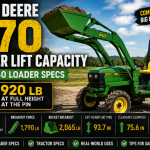
The John Deere 2040 with a John Deere 175 loader can lift 2,015 lb at full height at the pivot pin.
John Deere 2040 Loader Lift Capacity
Tractor Model
John Deere 2040
Machine Type
Utility tractor
Common Listed Loader
John Deere 175 front-end loader
Loader Lift Capacity
2,015 lb / 914 kg at full height at pin
Breakout Force
2,681 lb / 1,216 kg
Maximum Lift Height at Pin
124 in / 314 cm
Clearance with Bucket Dumped
104 in / 264 cm
Clearance with Bucket Level
118 in / 299 cm
Reach Dumped
36 in / 91 cm
Dump Angle
38 degrees
Rollback Angle
14 degrees
Loader Weight
995 lb / 451 kg
Bucket Widths
61 in / 154 cm or 73 in / 185 cm
Best Real-World Number
Use less than the pin rating for forks, logs, pallets, bales, and forward loads
How Much Can a John Deere 2040 Loader Lift?
The John Deere 2040 with a John Deere 175 loader can lift 2,015 lb / 914 kg at full height at the pivot pin. It also has a 2,681 lb / 1,216 kg breakout force, which helps when curling material or breaking loose dirt, manure, or gravel from a pile.
The working number is lower than the 2,015 lb pin rating when using pallet forks, bale spears, grapples, or long loads. The farther the load sits forward from the loader pins, the less the tractor can safely lift.
Use the 2,015 lb figure as the loader’s pivot-pin rating, not the safe pallet fork rating. Forks, logs, bales, and pallets move the load forward, so usable lift drops.
Quick Loader Specs Overview
2,015 lbLift at Pin
2,681 lbBreakout Force
124 inLift Height
995 lbLoader Weight
John Deere 175 Loader Specs
Lift Capacity at Full Height
2,015 lb / 914 kg at pin
Breakout Force
2,681 lb / 1,216 kg
Maximum Lift Height at Pin
124 in / 314 cm
Clearance with Bucket Dumped
104 in / 264 cm
Clearance with Bucket Level
118 in / 299 cm
Reach Dumped
36 in / 91 cm
Dump Angle
38 degrees
Rollback Angle
14 degrees
Boom Cylinder Diameter
2.5 in
Bucket Cylinder Diameter
2.25 in
Loader Weight
995 lb / 451 kg
Bucket Widths
61 in / 154 cm or 73 in / 185 cm
Loader Capacity Chart
Breakout Force
2,681 lb
Rear 3-Point Lift
2,400 lb
175 Loader Lift
2,015 lb
Loader Weight
995 lb
John Deere 2040 Tractor Specs That Affect Loader Performance
Engine
John Deere 2.9L 3-cylinder diesel
Claimed PTO Power
40 hp / 29.8 kW
Tested Drawbar Power
31.90 hp / 23.8 kW
Tested PTO Power
40.44 hp / 30.2 kW
Drive
2WD or 4WD depending on model
Transmission
8-speed partially synchronized
Hydraulic Type
Closed center on later listed model
Hydraulic Pressure
2,250 psi / 155.1 bar
Hydraulic Pump Flow
13 gpm / 49.2 L/min
Rear Hitch
Category II
Rear Lift at 24 in
2,400 lb / 1,088 kg
Weight
4,060 to 5,775 lb depending on setup
Loader vs Rear Lift Capacity
Breakout Force
2,681 lb
Rear 3-Point Lift
2,400 lb
Loader Lift at Pin
2,015 lb
Real-World Lifting: What a John Deere 2040 Can Handle
Mulch Bucket
Easy normal use
Loose Topsoil
Good, but wet soil gets heavy fast
Gravel Bucket
Partial buckets are smarter; full buckets can overload the loader
Manure
Good loader job with proper bucket and ballast
Firewood
Good for small to medium property loads
Small Logs
Useful within limits and with rear ballast
Pallet Forks
Useful for lighter loads only; forward weight reduces capacity
Round Bales
Depends heavily on bale weight, spear position, loader condition, and ballast
The 2040 is a useful loader tractor, but it is not a skid steer or telehandler. Forks, long logs, bales, and wet material reduce real usable lift fast.
Best Uses for a John Deere 2040 Loader
Moving mulch, compost, loose dirt, and garden material
General farm and acreage cleanup
Manure handling
Light-to-medium gravel work
Firewood and small log handling
Snow removal with bucket or blade
Light pallet fork work with proper ballast
Not Best For
Heavy pallet lifting at full reach
Full buckets of wet gravel or wet clay
Using the loader as a crane
Commercial high-cycle loader work
Replacing a skid steer, telehandler, or wheel loader
Loader work without rear ballast
Ballast: The Part People Ignore
The John Deere 2040 has useful loader capacity, but rear ballast still matters. Loader work shifts weight onto the front axle and can make the rear end light, especially with a full bucket or pallet forks.
Best practical setup: loaded rear tires plus a ballast box, heavy rear implement, rear blade, box blade, or proper 3-point counterweight when doing loader work.
No Rear Ballast
Bad idea for serious loader work
Loaded Rear Tires
Good baseline stability
Ballast Box
Best simple counterweight option
Rear Blade / Box Blade
Useful if heavy enough
Pallet Fork Work
Needs extra care because the load sits farther forward
Older Tractor Reality
Inspect front axle, steering, loader pins, mounts, hoses, and hydraulic leaks
Common Mistakes
Using the 2,015 lb pin rating as the pallet fork rating
Ignoring how far forward the load sits
Lifting heavy loads without rear ballast
Driving with the loader raised high
Trying to lift full buckets of wet gravel or wet clay
Forgetting that bucket, forks, spear, or grapple weight reduces usable payload