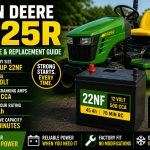
The John Deere 855 uses a 12V BCI 22NF battery with 500 CCA and 45 Ah.
John Deere 855 Battery Size and Specs
| Battery Voltage | 12 volts |
| Battery Setup | Single battery |
| Battery Group Size | BCI 22NF |
| Cold Cranking Amps | 500 CCA |
| Amp Hour Rating | 45 Ah |
| Battery Type | Wet charged lead-acid battery |
| Terminal Type | SAE automotive post |
| Common Deere Part | TY26498B |
| Engine | Yanmar 3-cylinder diesel |
What Battery Does a John Deere 855 Use?
The John Deere 855 uses a 12V BCI 22NF battery. The clean replacement spec is 500 cold cranking amps and 45 amp hours.
A higher CCA battery can work, but only if it fits the tray, clamps down properly, and the terminals match the factory cable layout.
For the John Deere 855, treat 22NF, 12V, 500 CCA, 45 Ah as the best replacement target.
Quick Battery Specs
12VVoltage
22NFGroup Size
500 CCACranking Power
45 AhCapacity
Best Battery to Use
- 12V BCI 22NF battery
- 500 CCA minimum
- 45 Ah capacity
- SAE automotive post terminals
- Heavy-duty vibration-resistant construction
- Correct terminal orientation for the factory cables
22NF Battery Fitment
| Battery Group | BCI 22NF |
| Voltage | 12V |
| Capacity | 45 Ah |
| Cold Cranking Amps | 500 CCA |
| Terminal Style | SAE automotive post |
| Fit Check | Confirm tray size, hold-down, post height, and cable reach before buying |
Battery Upgrade Option
The best upgrade for the John Deere 855 is a higher-quality 22NF battery, not a random oversized automotive battery.
- More reliable diesel starts
- Better vibration resistance
- Lower self-discharge during storage
- Cleaner terminals if using a sealed or maintenance-free option
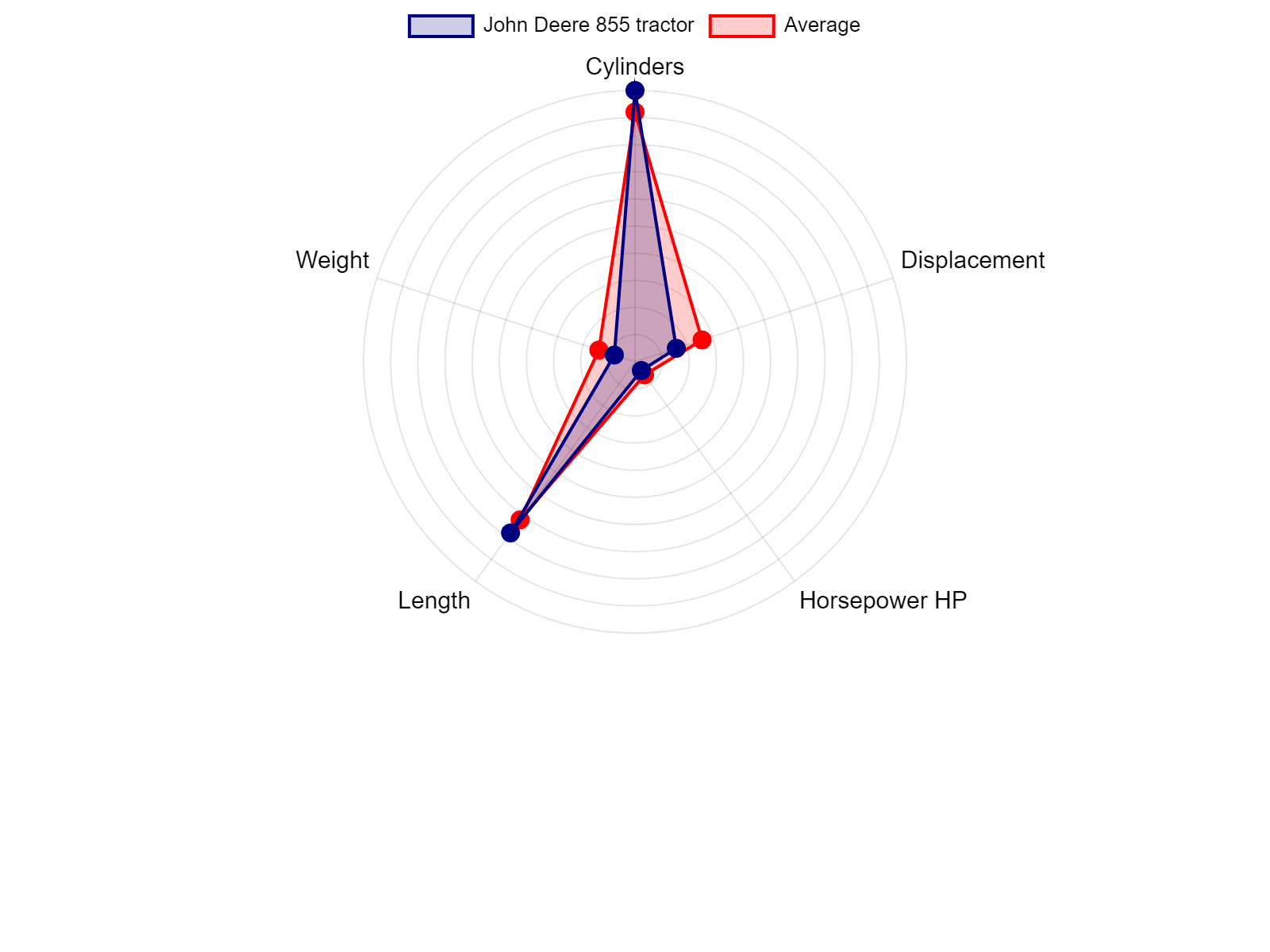
Battery CCA Comparison
Charging System Checks
- A fully charged 12V battery should read about 12.6V at rest
- Running voltage should usually be around 13.8V to 14.5V
- Slow cranking can come from dirty grounds or weak cables
- Glow plug problems can mimic a weak battery
- Test charging output before replacing another battery
Battery Replacement Tips
- Disconnect the negative cable first
- Reconnect the negative cable last
- Clean battery posts and cable ends
- Secure the battery tightly in the tray
- Check that the hood or bracket cannot touch the terminals
- Use a maintainer if the tractor sits for long periods
Signs the Battery Is Bad
- Slow cranking
- Clicking at the starter
- Starts only after charging
- Voltage drops heavily under load
- Corrosion keeps coming back
- Battery case is swollen, cracked, or leaking
Common Mistakes
- Buying a battery by size only without checking CCA
- Using the wrong terminal orientation
- Installing a battery that does not clamp down securely
- Ignoring dirty ground connections
- Blaming the starter before testing the battery and cables
- Letting the battery sit discharged during storage
Related Posts: